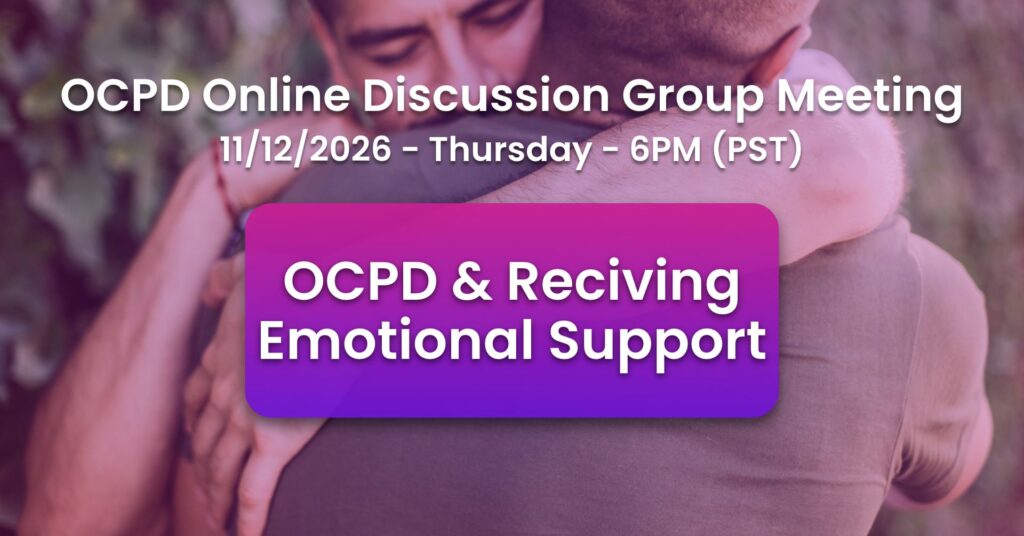
Join us as we discuss the various ways our OCPD traits shape and influence our experience of receiving emotional support from others. What comes up for us when we’re offered validation, care, consideration, compassion, and support?
Google Gemini AI Summary
Prompt: Summarize the various types of emotional support humans exchange and how OCPD traits might influence receiving emotional support from others.
Interpersonal support serves as a vital buffer against psychological distress, encompassing several distinct ways humans care for one another during times of stress, uncertainty, or emotional pain. While everyone gives and receives care differently, traits associated with Obsessive-Compulsive Personality Disorder (OCPD)—such as perfectionism, emotional overcontrol, hyper-responsibility, and a strong need for predictability—can significantly filter how support from others is perceived, accepted, or unintentionally deflected.
Types of Emotional and Social Support Humans Exchange
In psychological research, supportive interactions generally fall into five primary categories:
- Empathy and Emotional Validation: Offering warmth, active listening, and non-judgmental presence so another person feels heard and understood without anyone immediately trying to “fix” the feeling.
- Esteem and Reassurance Support: Affirming a person’s inherent worth, competence, and resilience—especially when they are doubting themselves or navigating a setback.
- Informational Support: Sharing advice, objective perspective, feedback, or resources to help clarify options and solve a problem.
- Instrumental (Practical) Support: Providing tangible, hands-on assistance—such as helping with tasks, managing logistics, or stepping in during practical emergencies.
- Companionship and Belonging Support: Being present through shared activities, unstructured downtime, or quiet solidarity that reinforces connection and counters isolation.
How OCPD Traits Influence Receiving Support
Because OCPD is largely ego-syntonic—meaning rigid standards and intense self-reliance often feel natural, responsible, and protective—receiving support can trigger subtle internal friction even when connection is genuinely desired:
- Emotional Overcontrol and Masked Signaling: Frameworks like Radically Open Dialectical Behavior Therapy (RO-DBT) classify OCPD as a disorder of overcontrol, characterized by emotional restraint and composed, self-contained social signaling. When someone keeps distress tightly governed behind calm logic or stoicism, loved ones may assume everything is fine and fail to offer comfort. Additionally, the “productivity paradox” means others often overlook the internal exhaustion behind high external functioning.
- Discomfort with Vulnerability: Accepting emotional comfort requires lowering psychological defenses and tolerating a degree of helplessness. Because OCPD relies heavily on logic, rules, and self-mastery as a shield against vulnerability, leaning on someone else during raw, unformatted emotional pain can feel unsafe or destabilizing.
- Intellectualizing Over Soothing: When distressed, someone with OCPD may default to analyzing the situation exhaustively rather than sitting with feelings. Pure empathy or unstructured emotional downtime can feel inefficient or unproductive, leading them to steer supportive conversations toward analytical problem-solving before emotional soothing has occurred.
- Perfectionism, Shame, and Hyper-Responsibility: When self-worth is closely tied to competence and “getting it right,” needing support can be internalized as a personal or moral failure. Reassurance or esteem support may bounce off a harsh inner critic, while a sense of hyper-responsibility can reinforce the belief that one must carry every burden alone.
- Control and Standards Around Practical Help: Although people with OCPD are often exceptionally dependable when giving practical help, receiving instrumental support can induce anxiety. Because they hold strict internal rules for the “right” way tasks should be executed, letting someone else step in can trigger fears of errors, inefficiency, or having to redo the work later.
- Sensitivity to Advice and Feedback: Informational support can easily misfire if a friend’s suggestion conflicts with the individual’s internal rulebook or implies they handled something suboptimally. Rather than feeling supported, the person may experience unsolicited advice as a critique of their competence—or dismiss casual suggestions as imprecise.
Overview of Support Types and OCPD Reception Filters
| Type of Support | Core Relational Purpose | Potential OCPD Reception Filter |
| Emotional Validation | Soothing and feeling understood | Discomfort with vulnerability; tendency to intellectualize pain rather than feel it |
| Esteem Support | Reinforcing self-worth | Deflected by the inner critic; needing support may feel like weakness or failure |
| Informational Support | Offering perspective or advice | Can feel like criticism if it clashes with internal rules or standards |
| Instrumental Support | Lightening practical loads | Reluctance to delegate or relinquish control over how tasks are executed |
| Companionship | Fostering belonging and rest | Unstructured emotional downtime can feel unproductive compared to task completion |
Navigating support with OCPD often begins with recognizing that accepting care is neither an admission of incompetence nor a loss of agency. Practicing intentional openness—such as explicitly telling trusted people whether you want a listening ear, specific practical help, or collaborative brainstorming—allows others to offer support in ways that respect your need for clarity while gradually easing the isolation of overcontrol.