
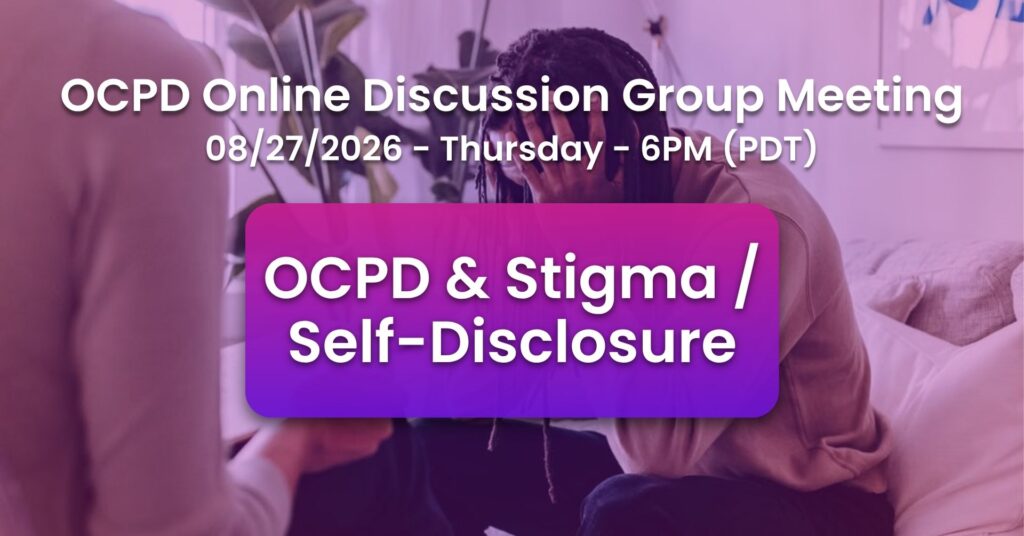
For this session’s topic, I decided to combine the overlapping issues of “disclosing our mental health conditions” with the very real possibility of encountering “mental health stigma“. When we think about combating mental health stigma, there’s often a component of speaking up and educating others, correcting their misconceptions, and even humanizing the experience through personal disclosure. Understandably, this can feel like a costly and risky barrier to entry that must be considered carefully. Below are a couple of resources regarding mental health stigma more broadly and then some Gemini summaries to help educate individuals with an OCPD about what self-disclosure might entail.
Google Search AI Summary
Stigma is a negative and often unfair belief, attitude, or stereotype that a society or group holds about a particular person, trait, or circumstance. [1, 2]
Key Forms of Stigma
- Public stigma: Widespread negative attitudes and stereotypes held by the general public toward a group.
- Self-stigma: Internalizing those negative beliefs and applying them to oneself, leading to shame or low self-esteem.
- Structural stigma: Institutional policies, cultural norms, and laws that limit opportunities and disadvantage specific groups. [1, 2, 3]
Stigma Versus Discrimination
Resources for Stigma
Mayo Clinic – Ways to cope with stigma
[Abridged, follow the link for the full article]
https://www.mayoclinic.org/diseases-conditions/mental-illness/in-depth/mental-health/art-20046477
Here are some ways you can deal with stigma:
- Make sure you get treatment. Don’t let fear keep you from getting help. Treatment can help you find out what’s causing your symptoms and lessen those that are leading to difficulties in your life.
- Don’t let stigma create self-doubt and shame. You might think that your condition is a sign of personal weakness, but it’s not. Get counseling and educate yourself about your condition. Connect with others who have a mental health condition like yours. This can help you build self-esteem.
- Don’t stay away from other people. Tell trusted family, friends, clergy or members of your community about your mental health condition. They can offer you support and understanding.
- Don’t think of yourself as your condition. You are not your condition. Say “I have a bipolar condition,” for example, instead of “I’m bipolar.”
- Join a support group. Groups such as the National Alliance on Mental Illness, also called NAMI, offer programs and resources that help lessen stigma by teaching people about mental health conditions. Some state and federal programs, such as those that focus on vocational readiness, and the Department of Veterans Affairs, offer support for people with mental health conditions.
- Get help at school. If a mental health condition affects learning, find out what plans and programs might help. In the United States, the law requires schools to help students with mental health conditions. Talk to teachers, professors or administrators about the best approach and resources.
- Get help at work. If a mental health condition affects your work, find out what your workplace can do to help. Many workplaces can adjust your work and offer employee assistance programs.
- Speak out against stigma. Share your opinions at events and online. This can help others and teach the public about mental health conditions.
NAMI – 9 Ways to Fight Mental Health Stigma
https://www.nami.org/blog/9-ways-to-fight-mental-health-stigma/
[Abridged list, follow the link for full quotes connected with each bullet point]
- Talk Openly About Mental Health
- Educate Yourself and Others
- Be Conscious of Language
- Encourage Equality Between Physical and Mental Illness
- Show Compassion for Those with Mental Illness
- Choose Empowerment Over Shame
- Be Honest About Treatment
- Let the Media Know When They’re Being Stigmatizing
- Don’t Harbor Self-Stigma
Google Gemini Summary for Self-Disclosure
Prompt: What might an individuals with an OCPD diagnosis be aware of when considering self-disclosing their diagnosis to others? What are some common mental health stigmas that people encounter?
Self-disclosing an Obsessive-Compulsive Personality Disorder (OCPD) diagnosis involves balancing the relief of authentic communication against the risk of public misunderstanding.
Key Factors in OCPD Self-Disclosure
- OCD Confusion: Most people conflate OCPD with Obsessive-Compulsive Disorder (OCD). They may expect visible rituals or intrusive fears rather than traits like extreme perfectionism, moral rigidity, and an overwhelming need for control.
- Relational Impact: Telling loved ones can frame rigid behaviors or high expectations as symptoms rather than personal attacks. However, it also carries the risk that future disagreements will be unfairly dismissed as “just your OCPD speaking.”
- Workplace Nuance: High attention to detail and intense work ethic are often celebrated professionally. Disclosing may lead colleagues or managers to view these strengths through a lens of inflexibility, micromanagement, or an inability to delegate.
- Vulnerability Defenses: For an individual whose primary coping strategy revolves around control and flawless execution, admitting to a clinical diagnosis requires intentionally lowering those defenses to embrace vulnerability.
Common Mental Health Stigmas Encountered
- Trivialization and Casual Use: Terms like “OCD” or “OCPD” are routinely tossed around to describe basic cleanliness or organization. This trivialization erases the serious psychological distress and relationship strain the clinical condition actually causes.
- Personality Disorder Bias: The clinical phrase “personality disorder” carries heavy social stigma. People often falsely associate it with being untreatable, toxic, or manipulative, which can cause listeners to react defensively.
- The “Productivity Paradox”: Because OCPD traits can result in high academic or professional output, others often dismiss the distress, believing perfectionism is a “good problem to have” rather than a source of deep anxiety and isolation.
- Moralization of Symptoms: Characteristics like inflexibility, strict adherence to rules, or high expectations are frequently misconstrued as intentional stubbornness, arrogance, or personal malice rather than symptoms of a diagnostic condition.
Google Gemini Summary
Prompt: Create a checklist of things to consider when preparing to disclose an OCPD diagnosis to others.
Here is the bulleted list to consider when preparing to disclose an OCPD diagnosis:
- Determine your objective: Clarify what you hope to achieve by disclosing (e.g., seeking support, setting boundaries, or explaining specific behaviors).
- Assess psychological safety: Consider the trust level and past empathy of the person you plan to tell.
- Prepare a simple explanation: Have a brief summary ready to explain OCPD and clarify how it differs from OCD (or other misconceptions).
- Decide on personal boundaries: Establish ahead of time what details you feel comfortable sharing and what topics are off-limits.
- Choose the right time and setting: Select a quiet, private, and low-stress environment for the conversation.
- Gather educational resources: Have a reliable article or resource on hand to offer if they want to learn more.
- Plan a post-disclosure debrief: Schedule time with a therapist or trusted counselor to process how the conversation went.

![[Zoom Meeting] OCPD & Disgust 🤢](https://www.youmeandocpd.com/wp-content/uploads/2023/12/2023-12-14-OCPD-Disgust-1024x536.jpg)
![[Zoom Meeting] Reflecting on the Year 2023 📝🔍](https://www.youmeandocpd.com/wp-content/uploads/2023/12/2023-12-28-OCPD-Reflecting-on-the-Year-1024x536.jpg)